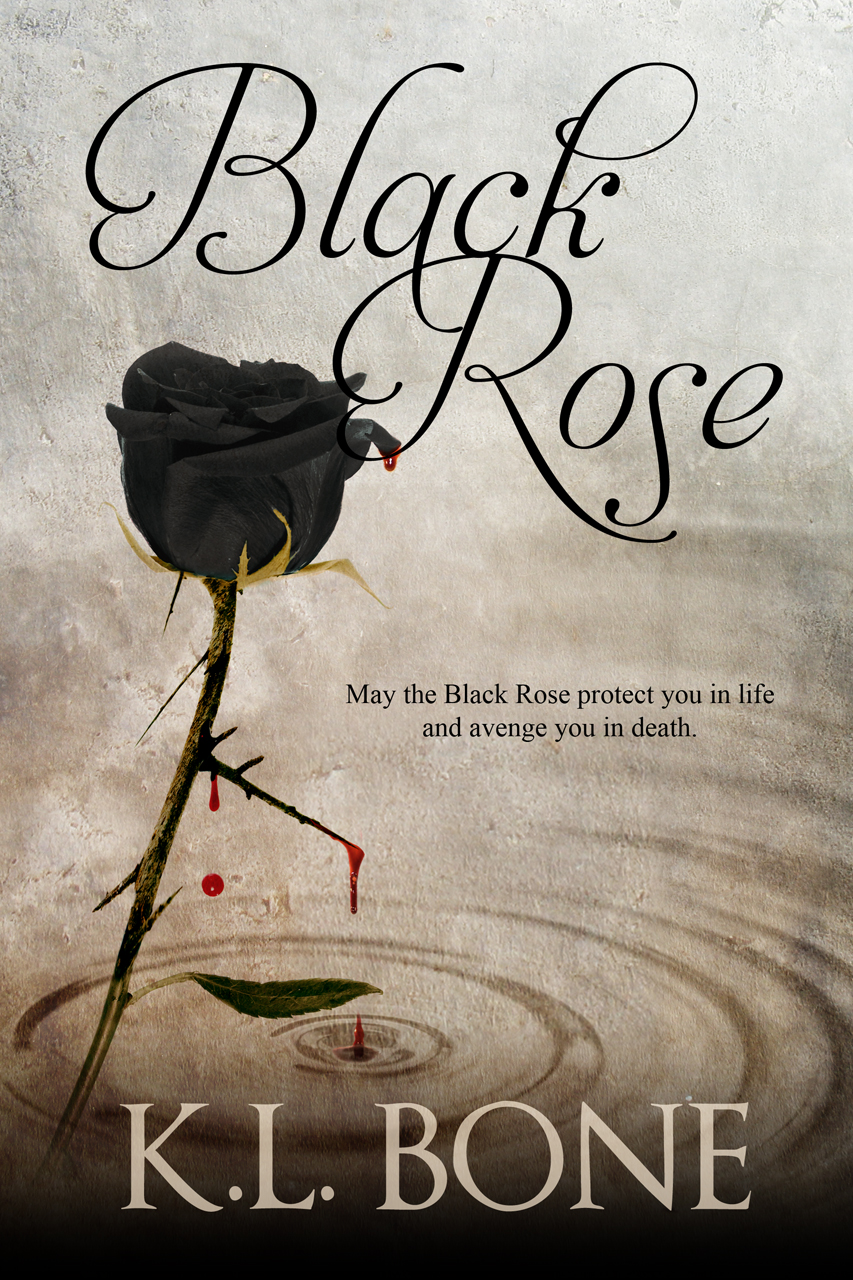
Black Rose Cover Reveal

BlackRose-Kindle

Cover Design by – Skyla Dawn Cameron

“May the Black Rose protect you in life and avenge you in death.” – Vow of the Black Rose

Six-Hundred years ago, the Muir Court was wiped from existence, destroyed by an elite group known as the Black Rose Guard.  Their Captain, Mara, has a reputation of being a harsh woman who leads the Black Rose with a fierce formality. During her long years, she has known pain, loss, heartache…and one great love.

Edward was the Captain of the Royal Guard.  He loved her once.  However, it was a love that faded the day he met young Liza, the Princess who stole the heart he had once sworn belonged to Mara alone. Liza was also the woman that Mara was fated to protect.  When the Queen learns of her daughter’s forbidden love for Edward, she devises a series of punishments, torturing Edward while her daughter is forced to watch.  In a an act of desperation, Mara takes Liza’s place and looks on helplessly as Edward endures the torments which break his body and Mara’s soul.

All of their pain is put aside when Liza is murdered by the rulers of a rival court.  Haunted by her failure to protect the Princess and adhering to tradition, Mara takes the vow of the ‘Black Rose.’ It is an ancient oath which ties those under its power to abandon the lives they knew for the sake of a single goal: vengeance.  Her quest leads her on a dark path of violence, rage and bloodshed.

Tormented by a fate they can neither accept nor escape, Black Rose is a tale of retribution, love, and above all, honour – at any cost.

Now Available:

http://www.amazon.com/Black-Rose-K-L-Bone-ebook/dp/B00OGN59WG/ref=sr_1_1?ie=UTF8&qid=1413593999&sr=8-1&keywords=black+rose%2C+k.l.+bone

2 Comments

Filed under Novels

Crafting a Fantasy World

I still recall my first creative writing course in college as one of the most valuable classes I have ever taken.  One of the elements my professor stressed above others was the importance of accurate description within a novel. He constantly challenged me in this area of my writing, asking me to be more detailed when it came to the world I was describing.

From my personal writing style, I have always had great difficultly writing what could be considered the most common of elements. For example, remembering to state that the grass on a warm spring morning is green under a blue sky were elements that I had difficulty remembering to include within the novel, due to the fact the fact that it takes little imagination in order to picture such a scene. In order to overcome this, and to force myself to learn the value and techniques of description, I found myself turning to the realm of speculative fiction, which forced me to confront the art of writing a truly descriptive scene.

To draw from examples from my own writing, in my YA series, Rise of the Temple Gods, the story is set in a completely fantastical realm. It is a land where there the grass is vibrant blue, leaves burst forth in yellow, pinks and orange from the bark of large red trees. The sky is violet, blazing with the light of three suns which rise and fall at varying times Horses come in multiple colors including silver, gold, pink, and blue. All of these details are extremely important when describing this fantastical world.

The act of writing such a world taught me, more than almost any other element, the importance of vivid, detailed and consistent description.

It is important, perhaps more so in speculative fiction than any other, to ensure that readers receive a clear, detailed picture of the world to which an author is attempting to transport them. Tips helping with this type of description vary for every author, but here are a few that I have found helpful over the years:

  1. The History – When creating a fantasy realm, it is often helpful to get a feel for the history of the world you are attempting to describe. Does it play host to a long and complicated history or a futuristic setting? Does it have a class system and if so, how do you begin to define it. Who are its rulers? Is there a structured government or other form of ruling body; or a complete lack of governance? For my YA series, Rise of the Temple Gods, crafting the numerous levels of the royal court from the King and High Lords, to the Lower Lords and Defendants, to the members of the small villages under the Lords control, all required a considerable amount of thought. I even created family trees for the families most important to the development to the story.
  2. The Physical World – I approached the physical characteristics of the world I was attempting to create by first, deciding basic factors such as sky color, the number of suns, the color of the grass and trees. Each of these elements was transcribed onto a list which hangs on my office wall. Keeping these details readily accessible (right in front of me) helps with consistency, as it is used as a reference while writing. I had a lot of fun with this portion of the process. Getting to build my worlds from the ground up is one of my absolute favorite parts of the writing process. In the initial portion of this process, the only limit truly is the scope of a writer’s imagination. In addition to making lists, I also have a series of maps. These maps help to show which regions are mountainous, where the palaces and temples are located and what terrain one might be traveling through as they ride between various locations throughout the story. Much like the lists, these map also helps with consistency as the story progresses.
  3. Clothing, buildings and color – In the writing process, it is easy to forget some of the smaller things, such as clothes, buildings, jewelry, weaponry or similar objects, however the details of the smaller objects can still play a significant role in any story. For example, In Rise of the Temple Gods, the color of one’s clothes plays an extremely important role. Students who attend the Temples of Kale are ranked based on their fighting skills, determined their performance in the tournaments in which they compete. The number one ranked student wears Gold. Number two, silver. Number three, red and so forth. This ranking system determines the level at which students are allowed to compete, their status among their fellow competitors, and their qualifications to become protectors of the realm. Color is also tied to the High Lords of the realm, as all of the men loyal to them are required to wear a particular color to denote to which Lord they are sworn to serve
  4. The Strange – In my science-fiction novel, the Indoctrination, description is equally important for the alien races from the various worlds encountered throughout Chrissalynn’s journey. Without substantial detail for the various races the Empress encounters, it would be very easy for the reader to become confused. Similar to describing alternative worlds, If the author fails to accurately describe them, then the reader is left with only a vague picture of what is so clear within the author’s mind.

All in all, description is a very important part of the writing process, worthy of being taken into consideration from the most sweeping of landscapes to the smallest of details. Here are a few more posts on the subject:

http://juliahoneswritinglife.blogspot.ie/2013/01/description-of-places-in-creative.html

http://writetodone.com/how-to-use-vivid-description-to-capture-attention/

1 Comment

Filed under Writing

What’s in a Name?

One of the most difficult tasks I have found as a writer is finding the perfect name for a given character. While this might seem simplistic on the surface, I have often found myself putting as much research into names as almost any other aspect of writing.

First off, when I name a character, the name is instantly placed upon a list which I keep beside the draft of my novels. I cannot count the number of times when, as I journeyed on my path towards becoming a writer, I would come to the sudden realization that I had used the same name for multiple characters within my novel. Because of this, I now keep lists to ensure that I do not double up on the characters. Additionally I often keep character descriptions, such as hair, eye and skin color along with any distinguishing characteristics alongside the list of names.

In my experience, naming characters arises in one of two ways. The first is a character who arrives fully formed upon the page. For me, this type of character is generally a protagonist. In my YA series, Rise of the Temple Gods, the first character to appear was Mariana. She appeared upon the page in a short story written many years ago, when the concept for the series was first developed. She arrived with her name, physical appearance, and a general idea of who she was. Interesting enough that she would later become the title character for my four book young adult series. The heroes she worshiped, the brother’s Kale and Koloso, also appeared upon the page fully formed with their names, stories, and backgrounds.

It is often difficult to explain how these types of characters come into existence. For me, it has always been like meeting a new friend. They introduce themselves, complete with the name of their own choosing, as though they had existed long before the first word of the novel was written. For me, these characters are a wonderful rarity and often become the most important or central figures within a novel, due to the rich background with which they arise from the depth of imagination.

The second type of character is one whose name is chosen more meticulously. They are often created in order to support or conflict with the protagonist in a particular way. Names have meanings behind them and I love the process of searching for names that match the role of a particular character’s personality. Take, for example, some of the names found within my first YA novel, Heir to Kale. At the beginning of the novel, the kingdom is protected by three central figures. The first is Prince Eadmund, a variation of Edmund, which means ‘protector.’ The second is Edward, leader of a team charged specifically with the protection of the realm. Edward means Guardian. The last is Leonardo, which has multiple meanings including Lion and protector. This name also requires a matter of trust between author and reader. As alternatively, one of the villains also features a name which means protector. I will leave it to the readers to figure that one out.

In my upcoming novel, Black Rose, I conducted more research on the names than on any previous novel. Mara and Edward jumped onto the page with their names already set. Others, such as the Sub-Captains of the Rose were all given Irish names in tribute to the fact that the story is based loosely on irish Mythology.

There are enchanted horses also featured within the story. The two horses with coats of silver are named Argento and Sterling. The fastest of the horses, Sherwyn ridden by the protagonist, means ‘swift.’

Also, the names of the realms found within the Kingdom were also specifically chosen. All have Latin roots and the names of each kingdom are identifiable with particular aspects of either events which take place within the kingdom, or with physical features of the land.

Overall, I find the naming of locations and characters alike a fascinating and often challenging process. It is another aspect that I feel is worthy of research and given consideration. It is one of the most difficult and enjoyable parts of my writing process.

Here’s an article by author Laurell K. Hamilton, who has also recently written on this subject:

http://www.laurellkhamilton.org/2014/07/choosing-character-names-part-2/


Leave a comment

Filed under Writing

London & Cambridge

IMG_1820

I spent last week in the United Kingdom attending a conference titled – Great Writing: The International Creative Writing Conference. The paper I presented primarily covered the conflict between the creative writing and literature branches of English in academia.  It was followed by a ten-minute reading from my YA Fantasy novel, Rise of the Temple Gods: Heir to Kale. I enjoyed getting to spend time with fellow authors and learning about the many amazing and diverse views on the writing process! For more information on the paper I presented, please see my pervious blog entry titled: The Writer’s Journey- https://klbone.com/2014/05/06/the-writers-journey/

I also attended a meeting of the Watling Street Writers Group of St. Albans, which I used to attend while living in England. There were a bunch of new faces, though a few old ones as well. My best friend and writing partner, Jonny, also came up to London to see me. We spent the day at Kensington Palace. It was my first time there and the grounds were beautiful!

IMG_1681

We had a great time exploring the gardens before eventually walking over to Hyde Park and stopping by Hard Rock Café. For those who don’t know, London is home to the very first Hard Rock, which was founded in 1971. I collect Hard Rock pins and t-shirts. I had a good time walking through the parks and enjoying good company.

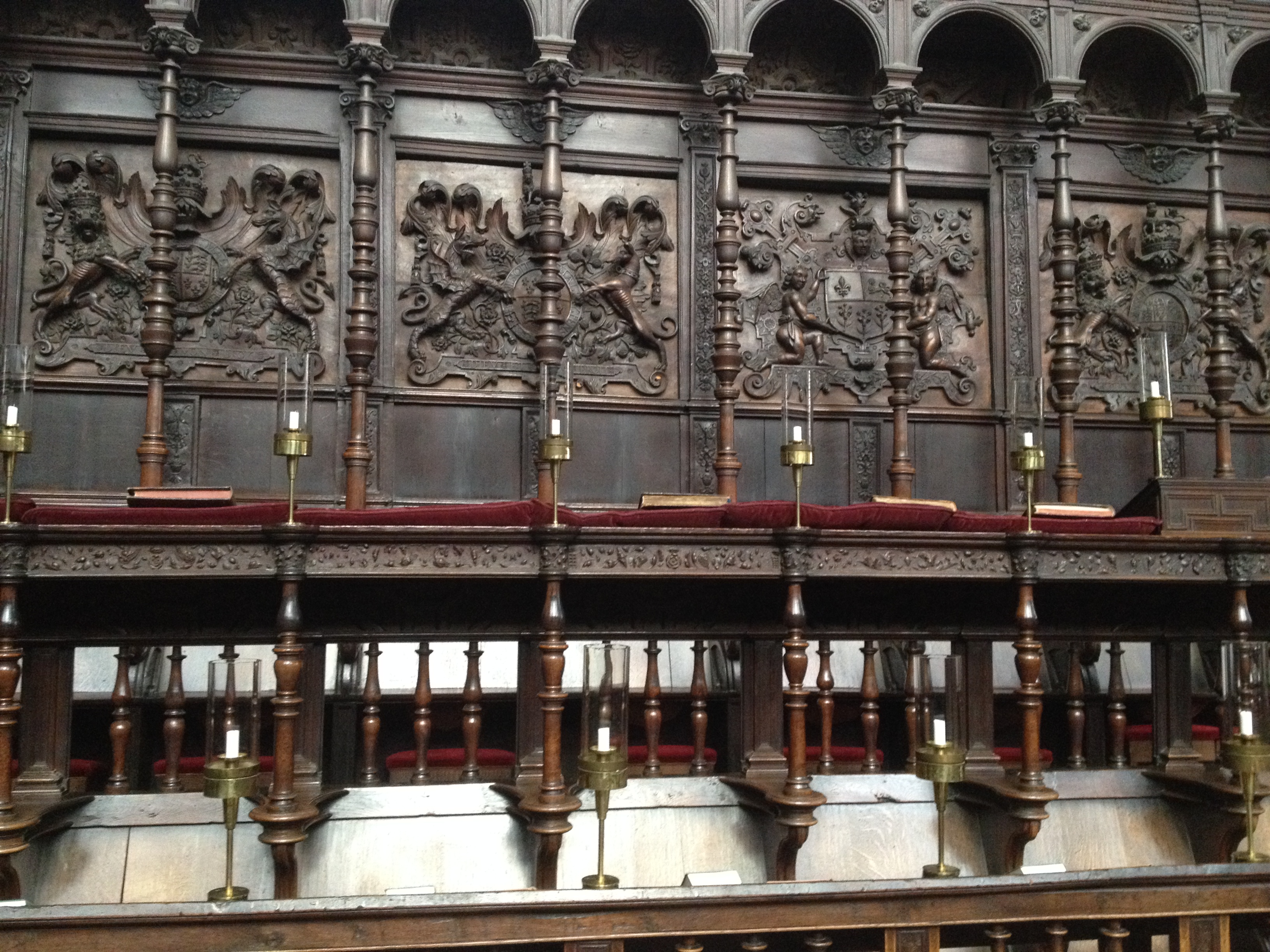
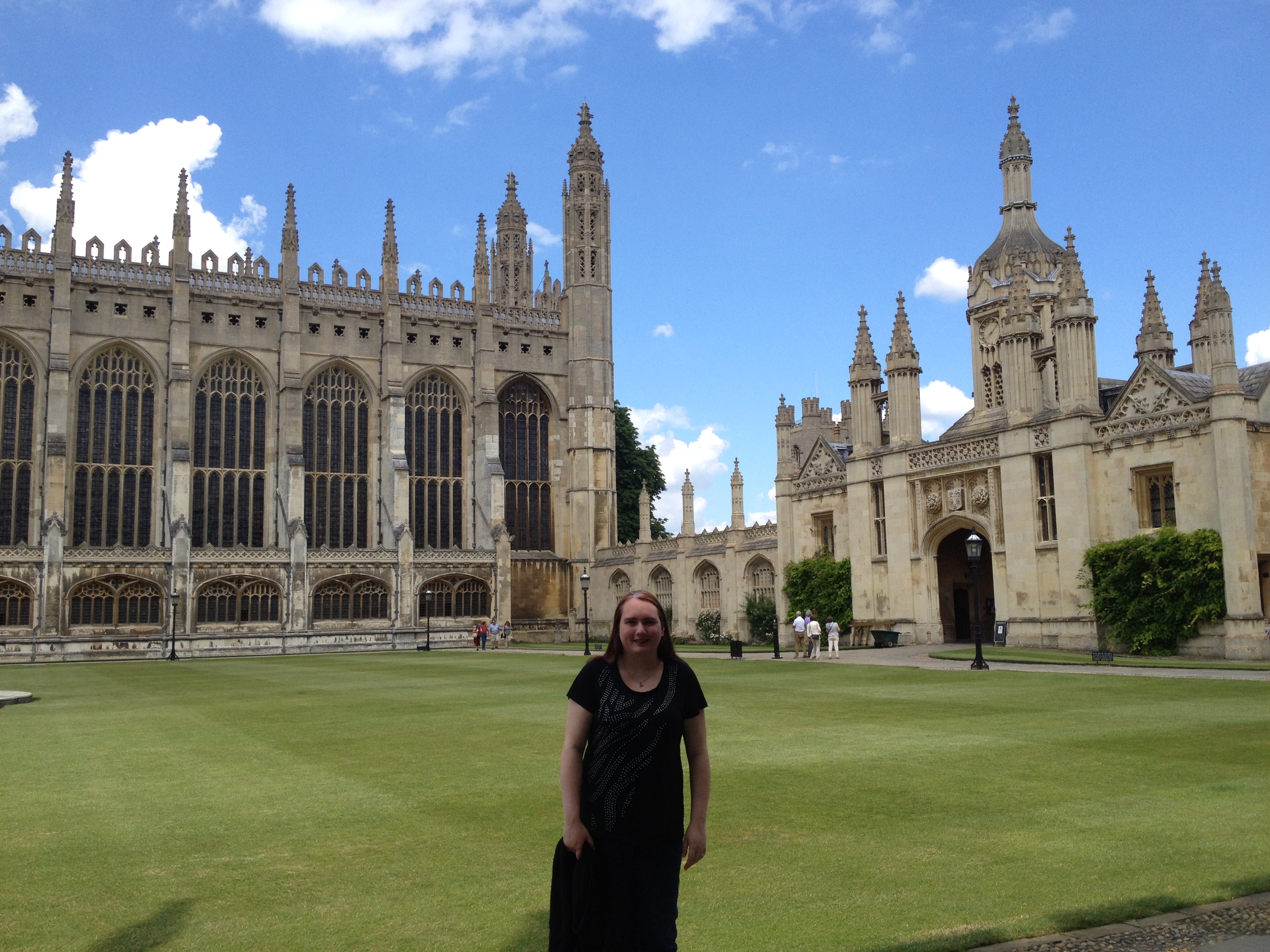
I also spent a few days in Cambridge. I had never been to the area before so I made a point to see lots of the tourist spots, including St. John’s College

IMG_1746


King’s College

IMG_1908


and a few others. I have a friend who is currently completing her Masters at Cambridge, so she kindly played tour guide for the visit. I thought Cambridge was beautiful and I could not help but stand in awe of the architecture and history portrayed within the walls of the university. I loved the visit and it was great to see my friends as well.

Overall, it was a great trip!


1 Comment

Filed under conferences, Travel

Game of Thrones Exhibition Belfast

Last week I went to The Game of Thrones Exhibition in Belfast, Northern Ireland. We started the day early in Dublin, and arrived in Belfast around nine in the morning. The exhibition was held at the Belfast Waterfront and was within walking distance of the train station, so we headed directly there after our arrival.

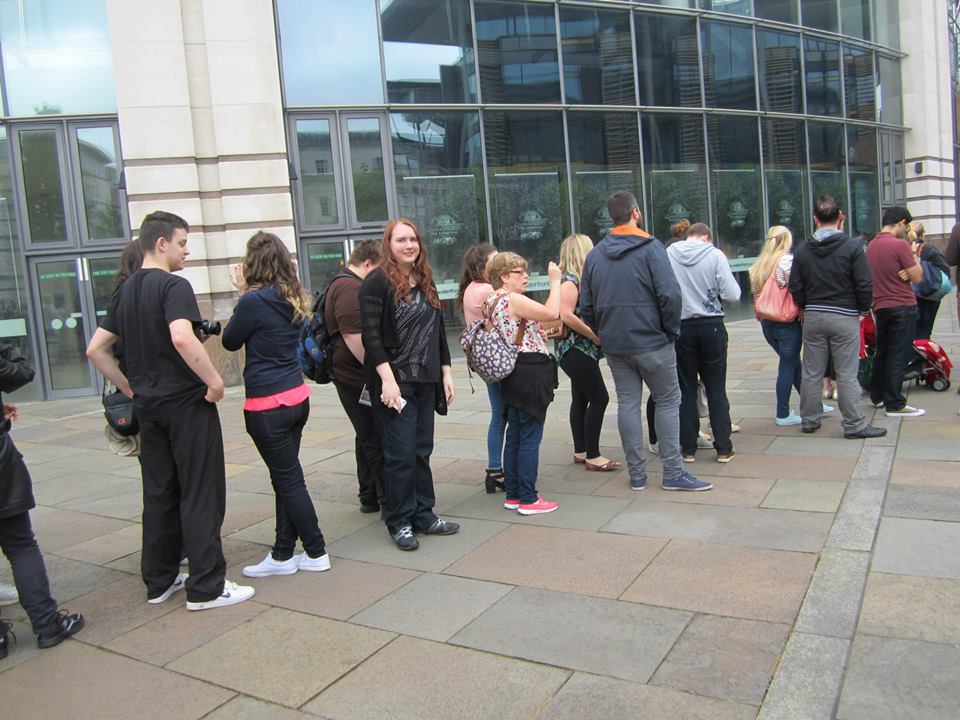
There were two ways to get into the exhibition. If you had tickets, then you also had an appointed time slot and all that was required was that you show up on time. The second was for those who did not have tickets, which included myself. Tickets for the event were extremely popular and had actually sold out in a matter of hours after their release. So I joined a long line of others who were allowed inside as the building’s capacity allowed.

game of thrones line

It took about two hours from our arrival to get into the building, which overall was not bad. It was fairly organized and according to one of the people running the even, just about everyone who had come to see the exhibition was eventually allowed in.

The exhibition featured, drawings, costumes and props from the Game of Thrones television show which were used on set. It included the gowns from Joffrey’s wedding.

Purple wedding clothes

Costumes worn by the Night’s Watch

the wall costumes


And, of course, Dragons!


dragon


It also featured many of the weapons carried by various characters and other props such as jewelry, and goblets.


weapons


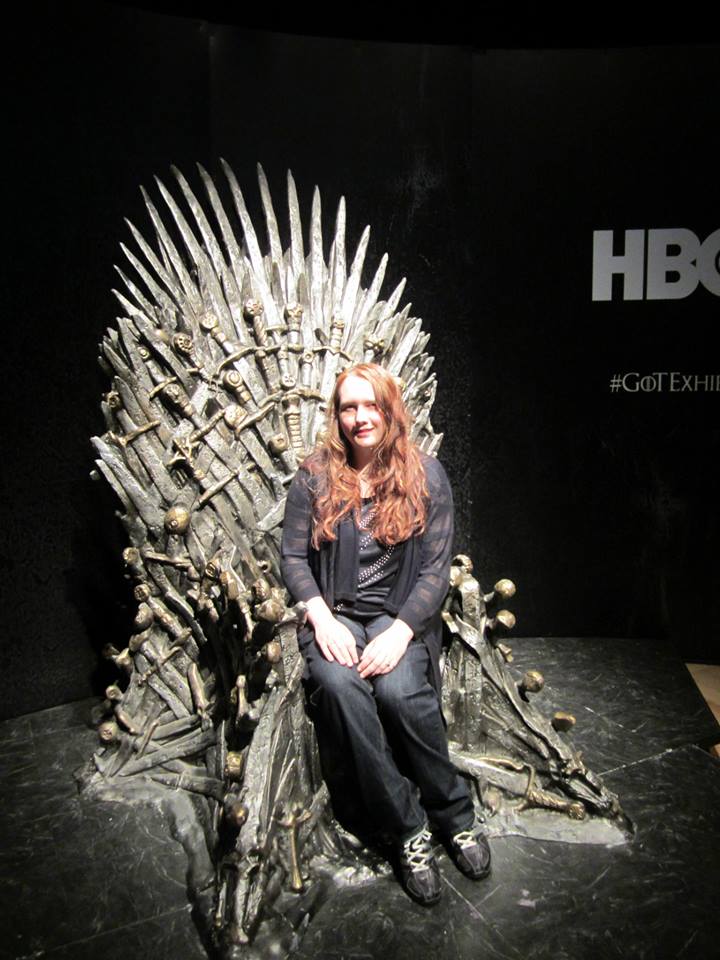
Visitors could climb the wall through the use of virtual reality technology and, of course the highlight, they could get their pictures taken on The Iron Throne where they were allowed to rule all within their sight…for the five to ten seconds they were allowed to sit upon the Throne.


Kris Iron Throne

It was a really cool experience. I am a fan of both the novels and the show, and to see the costumes up close and to see the amazing level of detail which went into the making of each and every piece really helped to bring the show to life. If you are a fan and fortunate enough to live in one of the cities where the exhibition will be coming, I would highly recommend visiting.


Leave a comment

Filed under Travel

100,000 Words Later…

I have been hard at work attempting to finish my next novel, which I am happy to report, just broke the 70,000 word mark.  As I’ve had little time for other writings, I have decided to turn this blog over to my husband for the week.  I hope you enjoy his perspective on the writing process.

Guest Written by: Cam Bone

In the beginning, she was just like everyone else.   But once it took over, she was no longer a normal human being.  She became…a writer.  I’ve attempted to chronicle the events as a warning to contain the spread.  I pray I am not too late.  I pray you never discover what happens

100,000 Words Later…

100 Words later…

The sun is shining, birds are singing.  The laughter of children can be heard over the jovial chatter of neighbors and the playful barking of dogs.  All seems right with the world.  My beautiful wife turns to me and says “I’ve got a a great idea for a story…”

1000 words later…

“How’s it going?” I ask, offering another beverage.  “Great,” she replies “the words are just flying off the page.”  I notice her rubbing her wrists.  I shrug it off as nothing.

3000 words later…

“…And then the evil queen is vanquished.” She’s been talking for half an hour straight.  There is an intensity in her eyes have not seen before.  I dismiss it as excitement.

5000 words later…

“Whoa, what the hell?” she exclaims, in a tone usually reserved for train derailments, A Kardashian in the White House, or a Game of Thrones death.  “Why did he do that?” she asks the non-existent fictional entity on her computer screen.  I look on in bewilderment.

10,000 words later…

I am awoken from a sound sleep with a rapid tapping on my shoulder. “Hey…Honey…HEY!!! I know where the next chapter goes.”  she then returns to sleep as though nothing happens.  I lay awake in confusion for the next few hours.

20,000 words later…

The clicking has grown in intensity over the last few hours.  The neighbors knock on the door to ask if we have a woodpecker.  I point to the feverish typing and the top of the head peeking over a laptop screen.  I accept their condolences.

35,000 words later…

“Honey,” I meekly ask “are you getting hungry yet?  How about some dinner?”  She looks up from her screen staring directly forward.  As the thought leaves her mind, she cranes her neck like a bird of prey.  She gives me a look that says “My name is Inego Montoya, you killed my great idea…prepare to die”

“WHAT?”  She dares.

I back away slowly.  What was I thinking?  We ate yesterday.

40,000 words later…

I decide to venture out for supplies.  “We need paper and coke,” the voice calls from the glow of the laptop screen.  I check my wallet.  We can afford it.  They say ramen tastes even better the second month in a row.

50,000 words later…

The pile of revised scenes and abandoned characters finally gave way and toppled on top of me.  After several hours I pull myself out.  I bandage my wounds with the revision of chapter 5.

60,000 words later…

The pounding on the other side of the bedroom door intensifies.  “But I just need your to read one more scene…just one.”  More pounding.  I slide bits of chocolate under the door until the pounding ceases and there is the sound of shuffling back to the computer.

75,000 words later…

Her eyes look up at me from the screen, the joy of life long faded.  Her fingers curl with arthritic frailty.  A rasp escapes her throat.  “Caffeine….Chocolate…LIQUOR…”  I give in and feed the writer all it needs to subsist now.

100,000 words later…

All is quiet.  The printer no longer screeches, it’s gears worn to the nub and the last drops of ink.  The clacking has finally ceased.  The glow of the laptop has dimmed.  She wanders the the apartment, shying away from natural light.  Confused, she shambles back to computer.  No matter how much she crafts, no matter how many words she prints, her hunger cannot be sated.  The writer will never stop now.

Let this be a warning to any left out there.  Protect your love ones.  Know the symptoms and be on your guard.

Leave a comment

Filed under Writing

The Writer’s Journey

Last week I gave a presentation on creative writing at a conference on emerging perspectives in graduate research titled – The Writer’s Journey: Creating Believable Characters in an Unbelievable World. This is a shortened version of the presentation focusing on the issues between academic and creative writing, the importance of research, and the emotional effects which writing can (and often does) have over a writer. 

I am a both a student of literature and a writer of speculative fiction.  Upon hearing this statement, question that I am frequently asked is why I decided to study literature as opposed to creative writing.  The answer involves the conflict that seems to exist between these two branches of English within the realm of the academic.

I decided to major in English when I was a junior in college.  However, once this fact was established, my university asked me to answer a particular question: Are you a reader or a writer?

To me, this question was a rather surprising one.  After all, the best writers are often the best readers, are they not?  Now, what the university actually meant was that they offered two different paths to an English degree, one focusing on literature and one on creative writing.  Excited by this writing option, I looked forward to attending my first creative writing course as an upper-level student.  However, once I actually arrived for my first day of the programme, I found myself extremely disappointed.

Sitting down in the classroom full of other potential students, I was issued two items.  The first was a copy of Stephen King’s book, On Writing: A Memoir of the Craft.  The second was a list of restrictions as to what would be deemed ‘unacceptable’ or at least, ‘highly discouraged’ topics.  I was very surprised when I read through the list and instead found that the restrictions included: ‘science-fiction, horror, fantasy, paranormal,’ and a number of other genres which can most accurately be described under the term ‘Speculative Fiction.’  The university preferred and encouraged topics of a more ‘literary’ nature despite using King’s text as a basis for the course.  Biographies, travel, nature and a relatively new genre coined under the term ‘creative non-fiction’ were among the favourites of those encouraged.

It was because of these constraints that I made the decision, despite my love of writing, to study literature, as it posed none of the restrictions on topic choices which were found in the ‘creative’ writing programme.  In literature I was able to pursue topics for which I found a passion that has carried me into later studies.

A few years later, when deciding to choose a graduate programme, I again discovered much conflict between the literature and creative writing realms.  Literature was seen by many as the higher of the two fields of study.  I was even asked if, given my love of writing, I would not prefer to obtain my degree in a quote: ‘easier’ creative writing field.

This implication that the field of studying literature is somehow more rigorous than the writing of fiction is, in my personal view, a misrepresentation, attributed mostly to a lack of understanding of the amount of both work and research which writers of fiction struggle to place within their creative pieces.

I pride myself on creating independent characters who have their own interests, backstories, and personalities.  Long before a story is completed, and occasionally from their first conception, characters take on a life of their own.  In order to create these characters to the best of one’s ability, an author must do two things.  The first, is to force themselves both mentally and emotionally into the role of the character being written.  After all, if I cannot feel the emotional impact of a given scene, then I cannot reasonably expect my readers to be affected by their plight either.  Only by fully exposing myself to the same emotional journeys experienced by my protagonists can I understand how the character in question should react.  This is also, perhaps, one of the reasons why one of the most common pieces of writing advice offered to young writers by professionals is simply to “write what you know.”  It is advice that I agree with wholeheartedly, but would also add an addendum to the statement: ‘Write what you know, and learn what you don’t.’

Literary critic Georg Lukács, not to be confused with the famous director,  states that characters “once conceived in the vision of their creator, live an independent life of their own; their comings and goings, their development, their destiny is dictated by the inner dialectic of their social and individual existence.”  He believed that characters “try to live their own lives,” independent of the author who created them.  This strive for independence, in turn, frequently forces an author to research places, activities, and fields in which he or she has never before had an interest.

Now, it should be noted that Lukás was in fact, a realist and the majority of his theories were applied specifically to works which could be classified as realism.  However, the same principles are easily applied to works of fiction.  Even among a fantastical setting, characters must be human in their mental and emotional capacities in order for the reader to relate to them.  The more relatable, the easier it is cause readers to form an emotional attachment which is essential to maintaining an audience, especially within Speculative Fiction where the lands created are often foreign to the reader’s notion of the world.

Research is an important and vital part of the creation of a novel, no matter what the genre.  While it is true that authors of speculative fiction might be able to take more liberties than those of non-fiction or realism, research still remains a vital part of the writing process.

Types of research vary from issues such as description, which International Bestselling Author Dan Brow (Da Vinci Code) argues is an important part of any novel.  Detailed description of scenes can prove a vital element towards bringing a story to life.  If the setting of a story is in the woods, authors should consider taking a walk in the forest.  Note the sounds they hear, the smells in the air, the way sunlight and shadows filter through the trees.  The same goes for a scene on the beach.  Walk along the waves, taste the salty air, feel the texture of the sand between your fingers.

Alternative methods to actually going to the place being described, is to read the works of those who have.  Extensive reading often proves to be one of a writer’s best resources.  Read descriptions of the places you plan to write about.  If you are writing about a real location, research its history, its layout, any other aspect which you may deem interesting or helpful within the research process.  Meanwhile, if the location is fictional, consider finding ways to familiarize oneself with the land being created. Authors will frequently write side-stories, histories, draw maps, and create charts, none of which will ever see the outside of their personal collection, in order to help support the setting of their stories.

Other important elements of research brings us back to the previously quoted statement by Lucas.  Lucas points out the characters often “life a life of their own,” after their conception.  What this means is that these characters can and often do have backgrounds, hobbies, skills, and interests which often vary from the writer’s own.  This means that in order to support these characters, a writer must often learn about these various topics, in order to support these said interests.

To draw an example from my own work, the Rise of the Temple Gods series, revolves around a world of martial arts and medieval swordplay.  When I first informed my writing mentor, of my initial ideas for the novel, her response was something akin to this:  “Sounds great!  However…one quick question.  What do you know about martial arts and swordplay?”

The answer, to quote George R.R. Martin, was something akin to: “Stick them with the pointy end?”

So began my journey into researching various forms of combat.  I did this by first, reading lots of books on various forms of martial arts, reading fiction which featured elaborate fight scenes, and even watching a few old kung-fu movies.  Then, I attended classes at local karate and jiu-jitsu dojos.  Though I did not partake of the actual courses, I conducted multiple interviews with instructors and observed students for hours on end, having specific movements demonstrated for me by students while I took extensive notes on the technique, instruction, and history of both disciplines.  This research was conducted over countless months, locations, and discussions with various experts.  When I had eventually written and completed these scenes to the best of my ability, one of these instructors was kind enough to read through and critique my action sequences.

Now as one can probably guess, this is not a quick process.  It is slow, often time-consuming and different authors will approach it with various levels of both time and dedication.  However, most find that in the end, such measures are well worth the work involved and are a vital part of the process needed to create a believable, rich tales; even in a land filled with ancient Gods, pink trees and talking puppies.

 

1 Comment

Filed under conferences, Writing

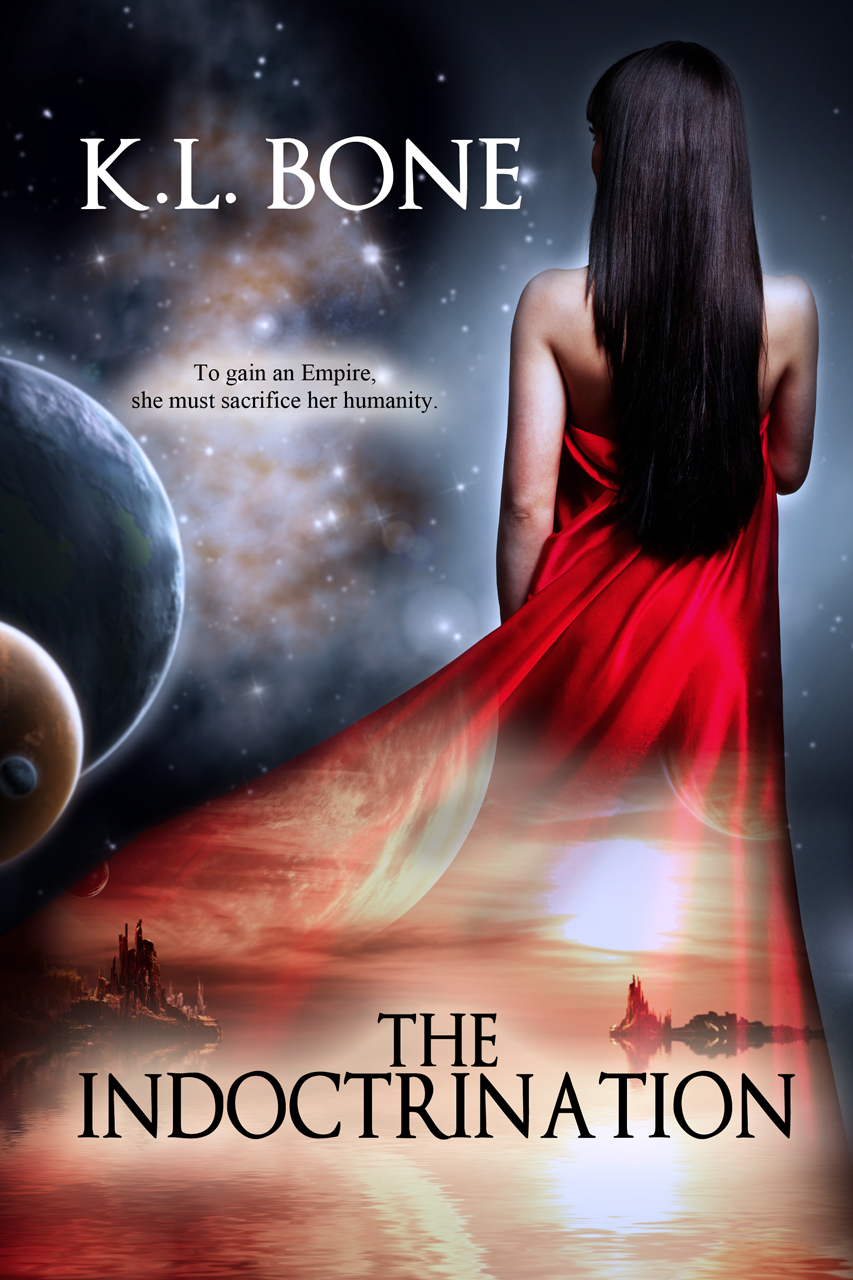
Indoctrination New Cover


 TheIndoctrination-Kindle

I am excited to announce that my science-fiction novel, The Indoctrination, features a completely new cover!  Created by the same designer who crafted the cover for my fantasy novels, Heir to Kale, the new cover more fully conveys the otherworldly nature of this sci-fi narrative and I could not be more delighted to be sharing it today!

Now available for both download and in paperback! 

Cover Design by Skyla Dawn Cameron

The Indoctrination is currently available for download on Amazon!

http://www.amazon.com/The-Indoctrination-ebook/dp/B00EK7J398/ref=sr_1_1?s=books&ie=UTF8&qid=1377116046&sr=1-1

Also available in Paperback: 

On Amazon:

http://www.amazon.com/The-Indoctrination-K-L-Bone/dp/1496072324/ref=sr_1_2?ie=UTF8&qid=1399111711&sr=8-2&keywords=the+indoctrination%2C+bone

On Createspace:

https://www.createspace.com/4528967

Leave a comment

Filed under Novels

Heart of a Character

Last night I wrote one of the final chapters of the novel I am currently writing, Heir to Koloso, the second novel in the Rise of the Temple Gods series.  The scene in question was one I had actively avoided writing for a long time, despite fully knowing exactly how the scene was going to take place.  I knew that in order to do justice by the story I am writing, the scene had to be written.  I cried as I wrote the last paragraph and when I was done, I left the scene with a profound sense of guilt and sadness.

I pride myself on creating independent characters who have their own interests, backstories, and personalities.  Long before a story is completed, and occasionally from their first conception, my characters take on a life of their own.  In fact, I often feel that I am not so much writing a story as instead transcribing the one being whispered by the various characters who come to whisper their tales in my ear.

To some this idea that my characters are individuals who can be spoken to, argued with and bring tears to my eyes, might seem a strange description.  However, it is my belief and my experience that this is the case.  Characters can, and often are, as real to an author as the person standing in the room next to them.  It is because of this close and often complex relationship between myself and my protagonists, that makes the emotional scenes so difficult to write.

In order to write these scenes to the best of one’s ability, an author often attempts to force themselves both mentally and emotionally into the role of the character being written.  If I cannot feel the emotional impact that is dealt to the character, then I cannot reasonably expect my readers to be affected by their plight either.  Only by fully exposing myself to the same emotional journeys experienced by my protagonists can I understand how the character in question should react.  This is also, perhaps, one of the reasons why one of the most common pieces of writing advice offered to young writers by professionals is simply to “write what you know.”

To help myself enter these types of scenes, I often set a musical playlist.  Absolute silence generally finds me terribly unproductive when writing.  I tend to use different types of music in order to help create and support the emotional level of a given scene.  My family will often say that when I am listening to something upbeat, I am fun to be around.  However, when I am listening to a straight track of Celine Dion, the best thing to do is to hand me a glass of wine and slowly back away from the door.

Leave a comment

Filed under Novels, Writing

Prague and the Evil Conference

I spent the last week in Prague, Czech Republic to attend the 15th Global Conference: Perspectives on Evil and Human Wickedness.  I was a presenter in the first panel, presenting a paper titled: Dark Side of a Hero: The Villain in the Role of the Protagonist.  The conference was excellent and inter-disciplinary in nature, featuring papers on everything from fictitious villains such as the Wicked Witch of the West, to a panel of speakers who spent three weeks in Rwanda researching the lasting impact of Genocide, to a creative piece on the impact of war.  Each speaker brought something truly unique to the conference from an international community, as over 11 different countries were represented this year from numerous disciplines of study.  It was my second time attending the Evil conference and I can truly say it is one of the more fun conferences I have had the pleasure of attending.

Prague itself was amazing!  The city was beautiful; one could hardly turn a corner without seeing a magnificent Gothic or Baroque building.  This was found on everything from the National Museum to the casual restaurant and offered amazing views of absolutely gorgeous buildings.  However, for me personally, the highlights were the Sedlec Ossuary in Kutna Hora, just outside of Prague and the Strahov Monastery in the city.

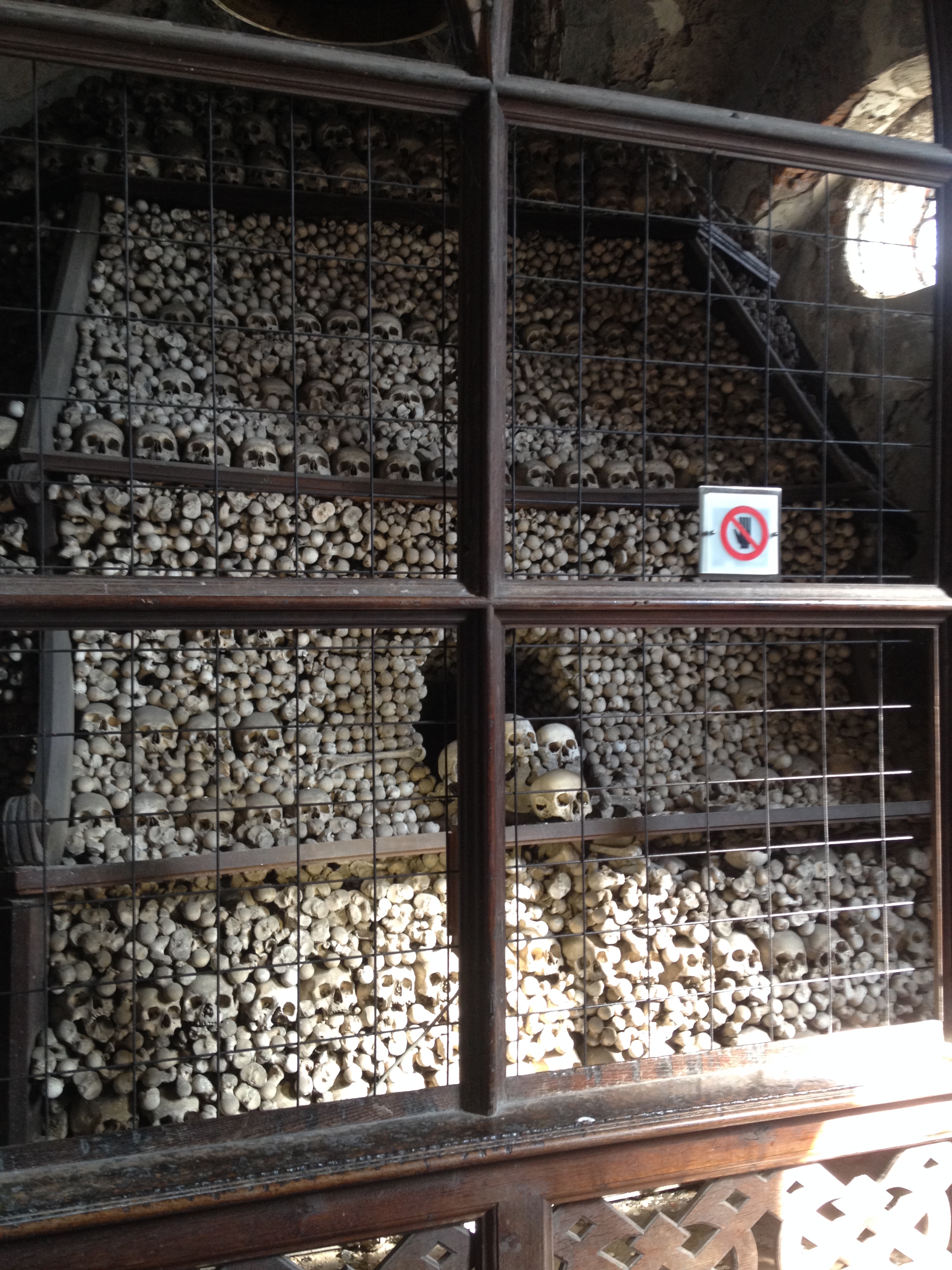
The Ossuary, also known as the Kostnice Sedlci.  It is a small Roman Catholic Chapel and contains approximately 40,000 human bones.

IMG_1036

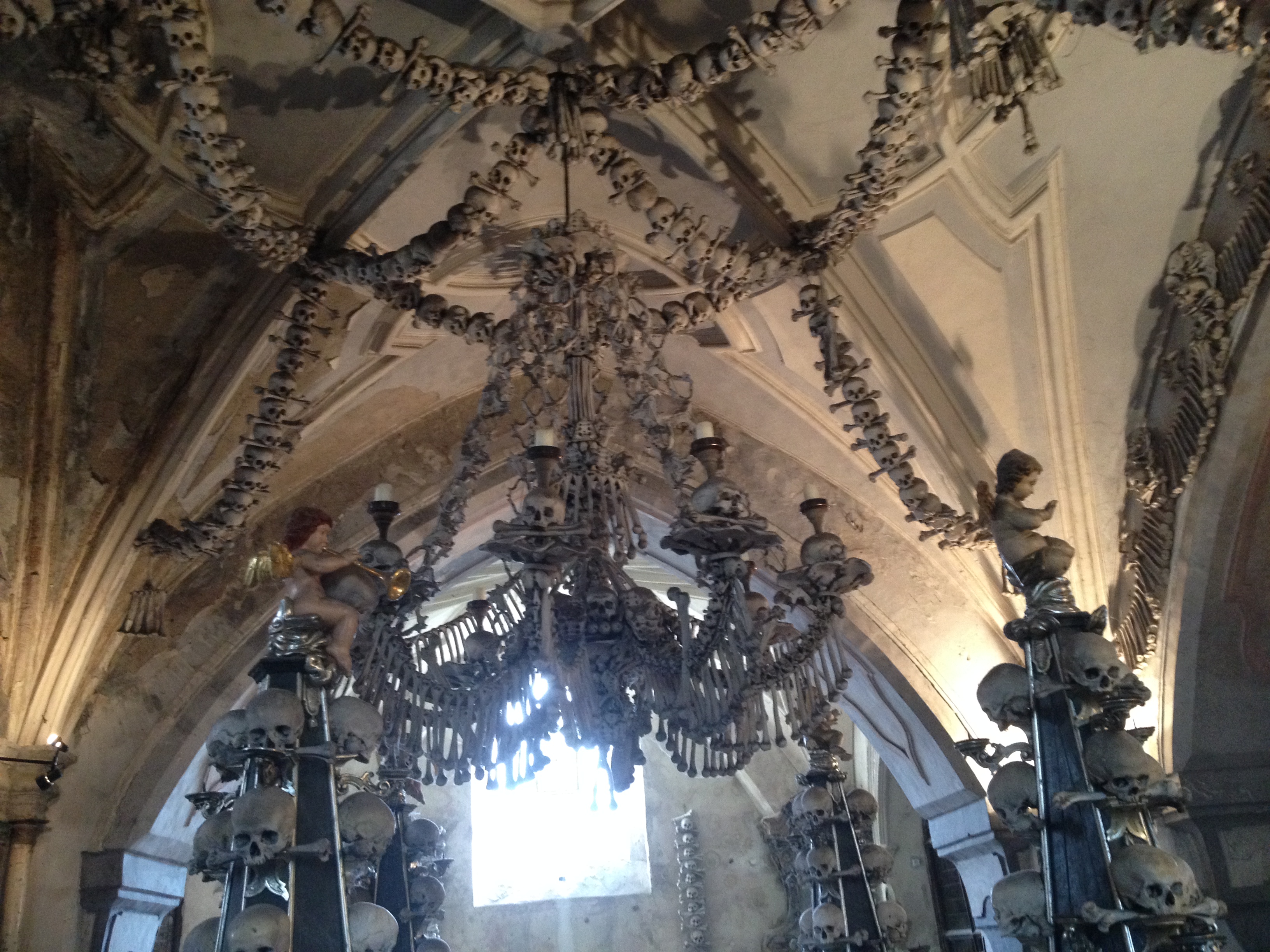
According to my tour guide, the monks started gathering bones from the cemetery surrounding the chapel in the early 1500s.  From these bones, they created six pyramids.  They did so as a demonstration of equality – to show that, in the end, all people end up exactly the same.  Then, in the 1870s, a man by the name of Frantisek Rint was hired to rearrange some of the bones into decorations which include a chandelier, candle holders and the family crest of the Schwarzenberg family.

IMG_1031

It was both thrilling and a little surreal to stand within the chapel.  I felt a great sense of reverence standing among those piles of indistinguishable bones and I would highly recommend anyone who has the chance to visit the Ossuary.

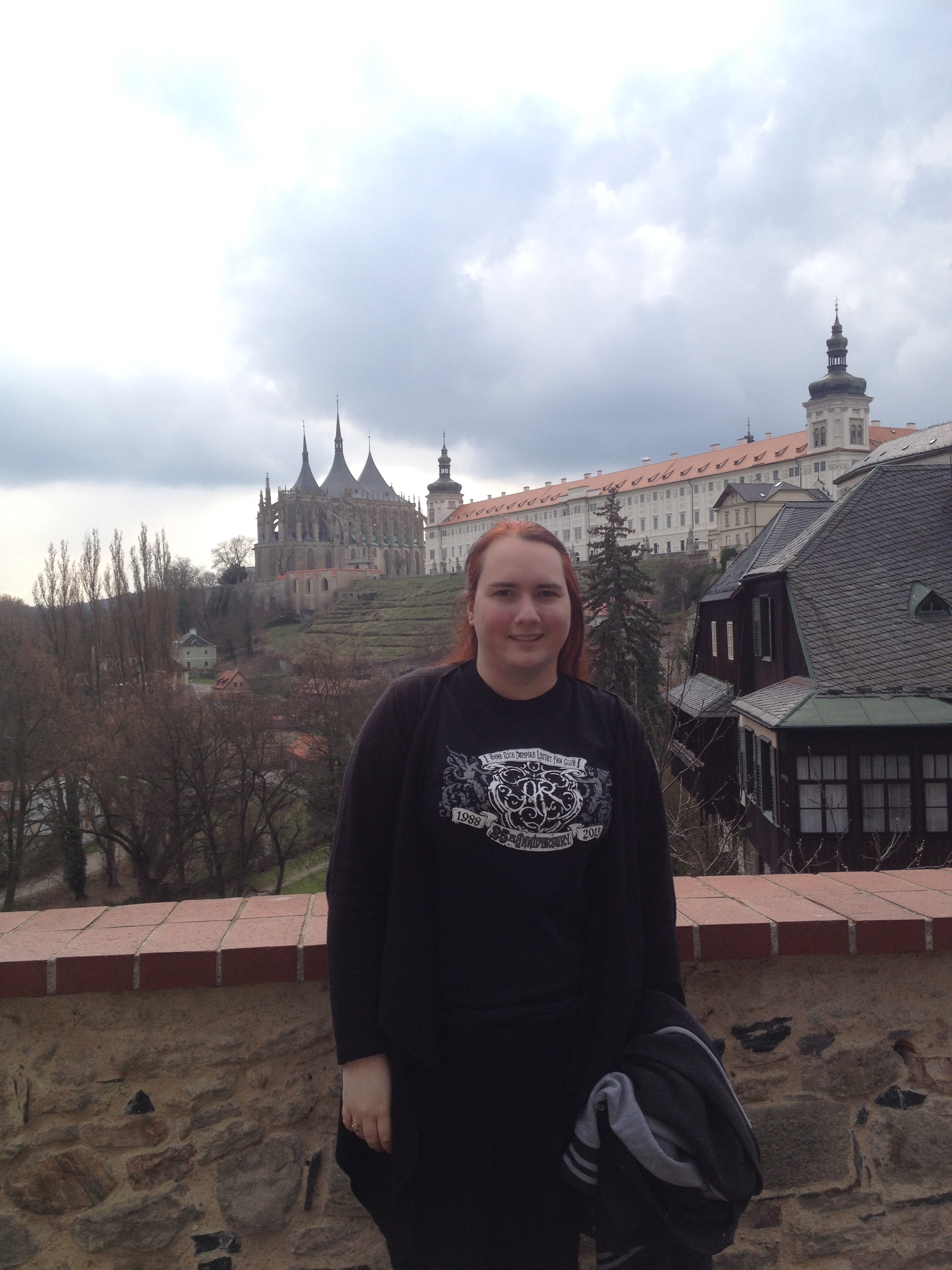
The tour I took also included a visit to the Church of St. Barbara which was one of the best examples of Gothic architecture I have seen to date.  From the towering arches to the numerous painted windows it was both intimidating and awe-inspiring. A walk around the church lead to a bridge lined with statutes intended to be Kutna Hora’s answer to the Charles IV Bridge in Prague.

IMG_1068

The next day, I went to the Strahov Monastery which was equally amazing.  Its library, featuring both a Theological and Philosophical Hall, was recently ranked among the top libraries in the world, and for good reason.  In addition to an impressive collection of books, some of which date as far back as the 1200s, the ceiling of the library is what I can only describe as breath-taking.  Housing over 18,000 theological and over 40,000 philosophical texts, the two halls are painted with various depictions of what they represent, with the Theological Hall including depictions of scenes from the Bible, from Adam and Eve to Jesus while the Philosophical Hall begins with scenes from Greek mythology to depictions of famous philosophers.

STRAHOV MONASTERY

STRAHOV MONASTERY

It reminded me of work I had seen in the Sistine Chapel in terms of both beauty and history.  The layout of the books, particularly in the Theological Hall, really reminded me of the Old Library at Trinity College.  I was also fortunate enough to have enjoyed dinner there which was excellent and served with wine and beer from the monastery’s own winery and brewery.

Overall, the trip was excellent and I enjoyed both the conference and the city.  It was a great experience and I look forward to the possibility of returning for next year’s conference. For any who might be interested, check out the conferences hosted by Interdisciplinary at: http://www.inter-disciplinary.net/

1 Comment

Filed under conferences, Travel